
When homeowners think about maintaining their homes, they typically focus on the things they can see and interact with every day. Roofs, siding, windows, HVAC systems, and plumbing fixtures tend to get most of the attention. However, one of the most important areas of a home is often one of the least visible: the crawlspace.
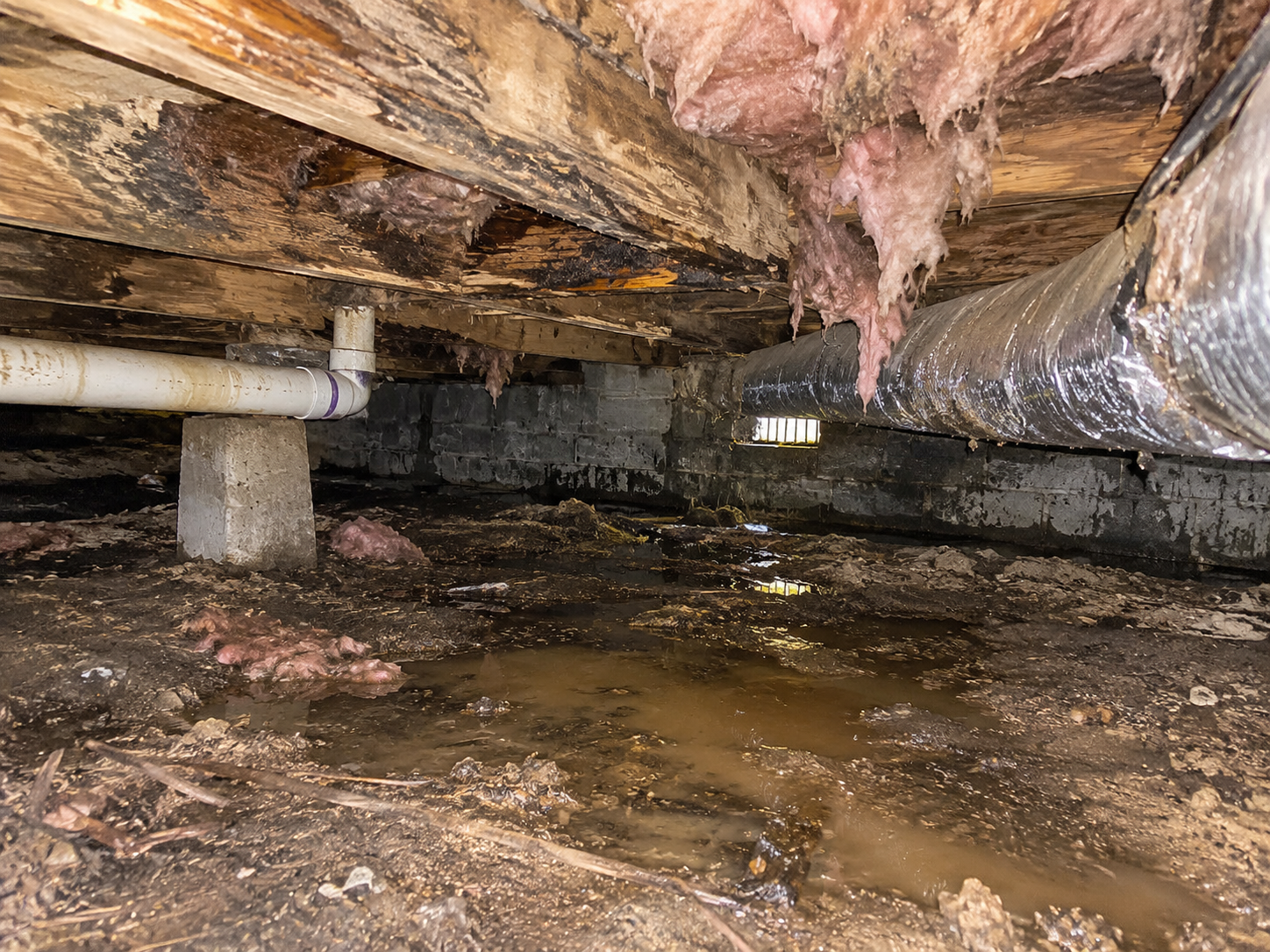
A crawlspace plays an important role in the overall health and structural integrity of a home. When properly designed, maintained, and managed, it helps protect the home's structural components from excessive moisture and the problems that can accompany it. When neglected, however, a crawlspace can become an environment that encourages wood decay, fungal growth, and wood-destroying insect activity.
The Relationship Between Crawlspaces and Moisture
Moisture is one of the biggest enemies of a home's structural components. The wood framing, floor joists, subflooring, and other building materials commonly found in crawlspaces are particularly vulnerable to prolonged exposure to elevated moisture levels.
Crawlspaces can accumulate moisture from several sources, including:
Ground moisture evaporating into the crawlspace.
Plumbing leaks and drainage issues.
Poor exterior grading that directs water toward the foundation.
Inadequate foundation drainage.
Humid outdoor air entering the crawlspace.
Condensation on cooler surfaces.
Without an effective moisture-management strategy, these conditions can contribute to elevated humidity levels and prolonged moisture exposure.
Why Proper Ventilation Matters
In a traditionally vented crawlspace, foundation vents are intended to allow outdoor air to circulate through the space. Under appropriate environmental conditions, this air exchange can help remove moisture and reduce the likelihood of excessive humidity accumulating.
However, simply having foundation vents does not guarantee that a crawlspace is adequately ventilated. Vents must be properly located, unobstructed, and appropriate for the crawlspace design and local building requirements.
It's also important to understand that ventilation alone is not a solution to every moisture problem. In humid climates, particularly during warmer months, introducing warm, moisture-laden outdoor air into a cooler crawlspace can actually increase humidity and contribute to condensation.
For this reason, proper crawlspace moisture management should consider the home's climate, drainage, ground moisture, air sealing, and ventilation strategy as a whole.
What Happens When Crawlspace Conditions Are Poor?
When moisture problems go unaddressed, the consequences can extend well beyond the crawlspace itself.
Some of the more common issues associated with persistently damp crawlspaces include:
Wood Rot and Structural Deterioration
Prolonged exposure to excessive moisture can create conditions favorable for wood-decaying fungi. Over time, affected floor joists, girders, sill plates, and subflooring can deteriorate and potentially compromise the structural integrity of the home.
Wood-Destroying Organisms
Damp conditions can make a crawlspace more conducive to certain wood-destroying organisms, including termites and wood-decaying fungi. Moisture does not automatically mean an infestation is present, but it can contribute to an environment that attracts or supports these organisms.
Fungal Growth and Musty Odors
Elevated moisture levels can encourage fungal growth on wood framing and other organic materials. Musty odors originating in a crawlspace can sometimes migrate into the living space above.
Indoor Air Quality Concerns
Crawlspaces are not necessarily isolated from the rest of the home. Air can move between the crawlspace and living areas through gaps, penetrations, and other openings. Consequently, conditions in the crawlspace can influence the air inside the home.
Ventilated vs. Encapsulated Crawlspaces
It's worth noting that a properly functioning crawlspace does not necessarily have to be a traditionally vented crawlspace.
Depending on the home's design, climate, and applicable building requirements, an unvented, properly sealed, and conditioned or dehumidified crawlspace may be an appropriate alternative.
The important distinction is that closing foundation vents without addressing ground moisture, drainage, air leakage, and humidity control can create additional problems rather than solve existing ones.
Whether a crawlspace is vented or encapsulated, the goal should always be to maintain an environment that limits excessive moisture and protects the home's structural components.
What Homeowners Should Look For
Homeowners should periodically pay attention to the condition of their crawlspaces, even if they rarely enter them. Some warning signs worth investigating include:
Standing water or persistently damp soil.
Missing, damaged, or improperly installed ground vapor barriers.
Water staining on foundation walls.
Condensation on plumbing pipes or ductwork.
Visible fungal growth or wood deterioration.
Musty odors inside the home.
Damaged or obstructed foundation vents.
Evidence of termite activity or other wood-destroying organisms.
If any of these conditions are present, further evaluation may be necessary to identify the underlying cause and determine the appropriate corrective measures.
Don't Overlook What's Happening Beneath Your Home
A crawlspace may be out of sight, but it should never be out of mind. Proper moisture management and an appropriate ventilation strategy are essential components of maintaining a healthy and durable home.
As home inspectors, we often find that some of the most significant issues affecting a home's long-term condition originate in areas that homeowners rarely see. A neglected crawlspace can allow relatively minor moisture concerns to develop into expensive repairs involving structural components and other building materials.
Taking the time to understand, inspect, and properly maintain your crawlspace can go a long way toward protecting one of your most valuable investments: your home.